Monthly content direction, topic plans and scripts, built around business goals. Production can be added as a separate engagement.
Next month is planned in advanceA written monthly plan replaces deciding week by week.
Scripts and hooks come with the planAngles, opening hooks and structure are written into the monthly plan.
What is included
Monthly content direction based on business goalsBuilt around the products and the customers the brand wants to reach.
Platform strategyInstagram, Facebook, Xiaohongshu, TikTok, YouTube and podcasts, combined around business goals.
Content angles, hooks and storytelling frameworksA consistent set of formats the team can reuse.
A path from content to enquiryPosts are sequenced to lead viewers from watching to enquiring.
Ongoing optimisationWhat performs shapes the next month.
Before and after planning
Planning is built for brands and for individuals. Below are three types of account. Each has a different problem before planning, and each plan is built around a different unit: a weekly opinion, the shop's working day, the product cycle.
All three accounts below are fictional demos, shown for illustration. A real example follows as a case study.
Personal brandFictional demo
Core ideaA personal brand runs on point of view and trust. We give each personal brand one clear opinion a week, one core theme a month, and the person on camera, so a visitor quickly understands who they help and how they think.
Planning unitOne opinion a week + one core theme a month + the person on camera
Common problems
1Sharing without a stanceMost posts are reshared articles and news. The person's own view never shows up.
2A bio that lists titlesThe bio stacks up job titles, so a visitor can't tell who this person helps, or with what.
3Only loud when sellingThe account stays quiet, then fills up with sign-up posts whenever a course or event opens.
4Rarely on cameraMostly templates and the odd casual selfie. People never hear the person speak, so trust builds slowly.
Before planning
clara.on.careers—posts—followers—followingclara ongCoach | Speaker | Mum | Coffee lover2TalksWorkshopMejobs & hiring weeklyAnother good read on the job market1Sat 2-5pm · DM to registerLAST CALLfew seats left!!Monday mood4Career Reset WorkshopWORKSHOP OPEN!link in bio3tech newsRepost: news on tech layoffsMonday motivationBelieve and achieve
After planning
clara.on.careers—posts—followers—followingClara OngCareer coachI help people in banking and finance plan a career switch.Ex-bank recruiter. One clear opinion every week.Book an intro callAboutOctoberQuestionsClientsAbout me: why I coach career switchersClara Ong · Careers1/6October: leaving banking@clara.on.careers · Monthly themeClara Ong · Careers1/7From ops to product, step by step@clara.on.careers · Client storyLIVELive: leaving banking, open Q&AClara Ong · Careers1/5You asked: am I too late to switch?@clara.on.careers · Reader questionIs a pay cut worth it? My honest answerYour LinkedIn headline is doing too muchClara Ong · Careers1/6Banking skills hiring managers read@clara.on.careers · Monthly themeStop calling it a “career break” on your CV
Pinned: About me: why I coach career switchers / October: leaving banking / A client's switch from ops to product
The monthly theme post, page by page
Scroll sideways for every page
Clara Ong · Careers1/5October: leaving banking@clara.on.careers · Leaving banking
Clara Ong · Careers2/5First, list what travels. Most of it does.Reading risk before others do.Explaining numbers in plain words.Knowing how compliance works.@clara.on.careers · Leaving banking
Clara Ong · Careers3/5Then rewrite the gap. “Career break” says nothing.Write what you did with the time: courses, projects.Headline: who you help, with what.@clara.on.careers · Leaving banking
Clara Ong · Careers4/5“Why leave now?” Say where you're going.Not what you're leaving behind.@clara.on.careers · Leaving banking
Clara Ong · Careers5/5Month end: Live, open Q&A.Send your questions in Stories this week.@clara.on.careers · Leaving banking
One week, as planned
One core theme each month, built around a professional point of view
MonNo post
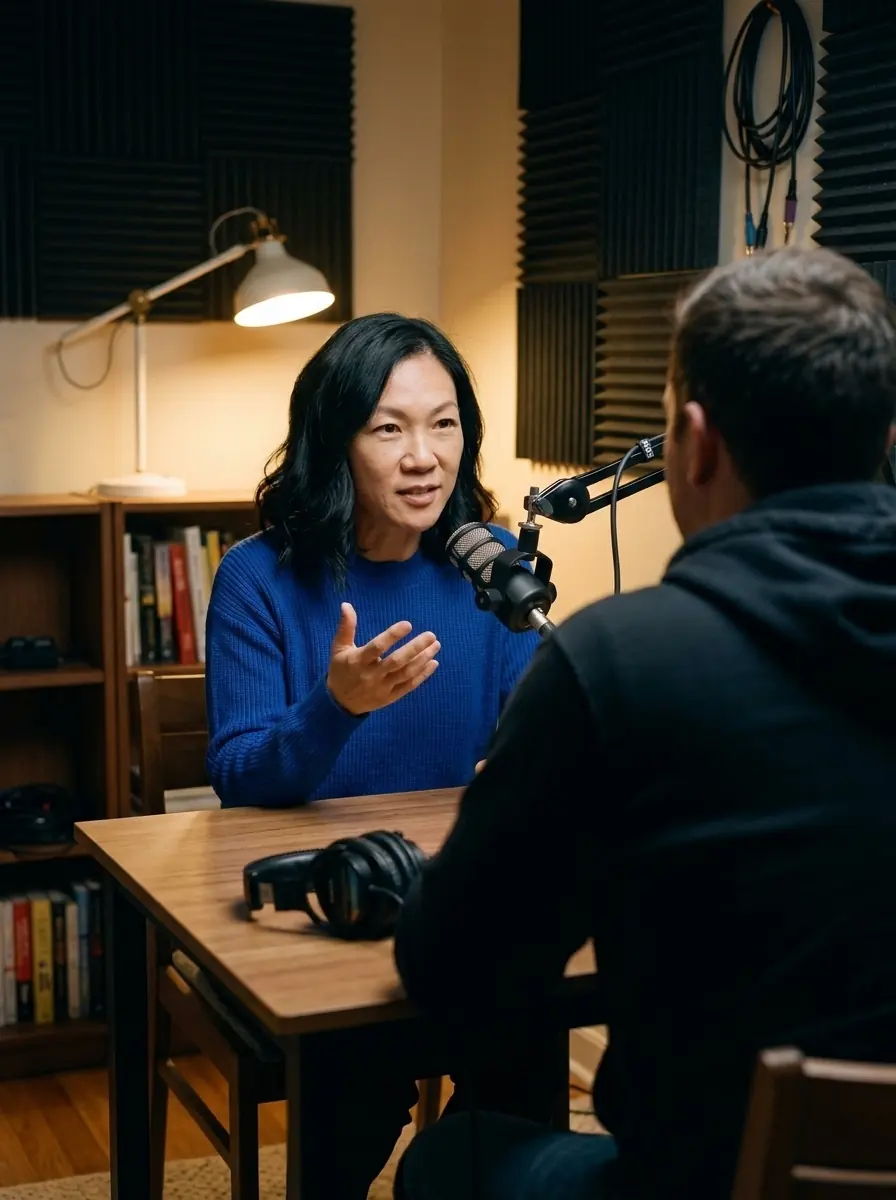
TueWeekly takeStop calling it a “career break” on your CVReel (to camera)
WedNo post
ThuMonthly deep-diveOctober: leaving banking. Here's what we'll coverCarousel
FriNo post
Sat?Audience questionsAsk me: what's keeping you in banking?Story (question box)
SunNo post
How the week works
Three fixed slots a week: an opinion to camera on Tuesday, a carousel on the month's theme on Thursday, and a Story collecting questions on Saturday. The volume is small on purpose; what matters is a clear stance every week. The questions that come back become next week's topics, and a Live at month end closes the theme.
Content directions
Weekly take
A clear stance on a common piece of advice in the field, so people remember where the person stands.
Monthly deep-dive
One core theme split into several posts, worth saving for the people the brand wants to reach.
Audience questions
Questions collected on Stories are answered in public, so topics start from real worries.
Client stories
A past client's story, shared with permission, shows the method at work.
What changes
The account moves from reposting news to a steady stream of its own views, so visitors can quickly tell whether it is right for them.
A monthly theme ties single posts together into a set people want to save.
The person appears on camera every week, so viewers hear their views and way of speaking directly, which helps build trust.
Sign-ups and offers arrive after related content, so they no longer feel abrupt.
Shop brandFictional demo
Core ideaA shop's content follows its working rhythm. For shop brands, we give each day's bakes, each week's special and each season's pre-orders a fixed place, so neighbours know what's in today, when to drop by, and who's behind the counter.
Planning unitThe daily working rhythm + a weekly special + seasonal items + the people in the shop
Common problems
Same counter shot, every timeEvery post shows the finished product on the counter. The handwork, the waiting and the feel of the shop never come through.
Opening info buried in captionsClosures, sell-outs and pre-order deadlines sit in old captions, so customers keep asking by DM.
Only visible on festive datesPosts cluster before festivals, then the account goes quiet for weeks.
Uneven photosDifferent staff shoot under fluorescent light, so colour and sharpness change from post to post.
Before planning
sundayloaf.sg—posts—followers—followingsundayloaf.sgbread • buns • cakespls DM for ordersMooncake 2024Happy National Dayfrom all of usSorry, sold outNEW!!Closed tomorrowMooncake pre-ordernow open!!Happy CNYfrom all of us
After planning
sundayloaf.sgSL—posts—followers—followingSunday Loaf BakehouseBakeryTue–Sun 7am–3pm · closed MondaysOrders by WhatsApp (text only)Your neighbourhood bakehouseChristmas box pre-orderHoursTodayPre-orderRegularsMade by handThis weekend onlyPandan chiffon loafKaya bunsStollen, test batchSat & Sun, from 7am, till sold outChristmas boxwith Aunty Mei
Before planning, customers had to ask by DM
Hi, are you open today?Still got sourdough?Is the mooncake pre-order still open?
Content directions
Today's items
A daily Story on what's out and what's sold out replaces the “are you open?” messages.
How it's made
Prep and making footage shows the work behind the price.
Seasonal items
Pre-orders get a lead-up instead of a single last-minute post.
Regulars and staff
Familiar faces are what a neighbourhood shop is really selling.
A working day, and what goes out at each point
Before openingPrep and making are filmed for the week's process video.
First batch outToday's items go up as a Story.
Counter hoursRegulars and staff are photographed for the weekly people post.
Sold outThe same Story is updated, so nobody has to ask.
ClosingHours and pre-order details are saved to Highlights.
The daily Story
SLsundayloaf.sgTodayToday’s trayKaya bunsSold outSourdoughOn the shelfCurry bunsOn the shelfPandan chiffon loafOn the shelfClosed Mondays
Posted after the first batch, updated when something sells out.
One week, as planned
MonClosed
TueToday's items
WedToday's itemsHow it's made7:10am: first tray of kaya bunsReel
SatToday's itemsRegulars and staffMeet Aunty Mei, our morning shiftReel (behind the scenes)
SunToday's itemsSeasonal itemsChristmas pick-up timesStory (saved to Highlights)
Daily, Tue–Sun: Today's tray + sold-out update
How the week works
One Story every opening day reports what's out and what's sold out, which answers “are you open?” before anyone asks. Two feed posts a week: one on how things are made, one on the people in the shop. In a pre-order season, the reveal and the deadline reminder are added, and pick-up times are saved to Highlights.
What changes
Hours, sell-outs and pre-order details live in one fixed place, so customers no longer need to message the shop.
Content follows the working day and the seasons, keeping the account active between festive dates.
Showing the process and the people makes the shop's character easier to remember than a product shot alone.
Seasonal pre-orders get a proper lead-up, with separate moments for the reveal and the deadline reminder.
Product brandFictional demo
Core ideaA product brand has to show where the product sits in someone's day. For product brands, we plan around the product cycle: each launch gets a teaser, a release and a how-to; ordinary days get real use; customer posts are reshared on a rhythm; promotions stay in one fixed slot.
Planning unitThe product cycle (teaser → launch → how-to → customer response) + everyday use + gifting season
Common problems
Wall-to-wall packshotsEvery post is the product on a white background. The feed reads like a catalogue, not a brand.
Promotions mixed into everythingDiscount codes, free-shipping notices and flash sales sit between brand posts, so the grid looks like a flyer.
No moment to use it inNo how-to and no everyday setting, so customers can't picture where the product fits into their day.
Reposts and festive cards fill the gapsWhen there's nothing planned, the grid fills with reshared photos and holiday templates, and the brand's look gets blurrier.
Before planning
morrow.tea—posts—followers—followingmorrow tea | healthy living🍵 Hot and cold brews🍵 FREE shipping above $50!!🍵 Shopee link belowHow to orderReviewsComing soon“Life is like a cup of tea, it's all in how you make it@morrow.teaNEW ARRIVALThree new blends, now on Shopee. Link in bio!“No matter where you are, you are at home when tea is served@morrow.teaFLASH SALEends tonight!!Happy CNYfrom morrow tea
After planning
morrow.teamorrow—posts—followers—followingMorrow TeaTea shopSmall-batch tea for the working day.Online shop • Corporate gifts • Tea eventsShop the New Year gift boxBREWBrewingNEWNewGIFTSGift boxFOR TEAMSCorporatemorrowBrewing guideOsmanthus Oolongthree waysNew Year gift boxmorrowTea for the dayMorning, 3pm,after dinner
A new product, released in four steps
1TeaserSomething new on Wednesday
2LaunchMeet Osmanthus Oolong
morrowBrewing guideOsmanthus Oolongthree ways3How-toOsmanthus three ways: hot, iced, with milk
4From customersCustomer photo: their mug, our Osmanthus
One week, as plannedWhere this week sits in the product cycle
EverydaySatDesk tea, 3pmPost (lifestyle photo)
TeaserMonCountdown: new tea out on WednesdayStory (teaser)
LaunchThis weekWedMeet Osmanthus OolongCarousel
How-toFriOsmanthus three ways: hot, iced, with milkCarousel (how-to)
Customer responseSunCustomer photos this weekStory (reshare)
This is a launch week: a teaser Story on Monday, the launch on Wednesday, a how-to on Friday and customer reshares on Sunday, with one everyday post in between. Promotions only go into a fixed Story slot. Once the launch is done, gifting-season content picks up from there.
Content directions
Everyday use
Real settings help customers see where the product fits into their own day.
Launch cycle
Each new product gets a teaser, a launch and a how-to, instead of a single post.
From customers
Regular customer reposts let real use speak for the brand.
Gifting season
Gift content is planned early, and promotions stay in one fixed Story slot.
What changes
The product appears in everyday settings, so customers can picture using it themselves.
Each new product gets a teaser, a launch and a how-to, so it isn't buried after one post.
Promotions stay in a fixed slot, keeping the brand's grid clean and consistent.
Customer posts are reshared on a rhythm, so real users help shape how the brand is seen.
NG Classroom (NG班房)Case study
NG Classroom is a web variety show based in Singapore, published on Instagram and YouTube.
Its content is organised by programme format, each with its own look in the grid. Full episodes run on YouTube; short clips from them run on Instagram.
Programme formats
Podcast interviews
Sit-down conversations with guests in the studio, released as full episodes on YouTube.
Variety episodes
Studio episodes with a variety-show feel, built around everyday stories and life abroad.
Extracurriculars
The location series, filmed away from the studio, including shop visits and special projects.
Reels clips
Short cuts from the full episodes, posted on Instagram.
Programme sponsorship
A brand appears within episodes as a programme sponsor, with its logo and credit shown.
CallA strategy call to line up goals, audience and platforms.
PlanA monthly content plan: topics, posting order, and scripts with opening hooks.
ReviewA look at what performed, and the next month adjusted around it.
This is a monthly engagement, scoped to the platforms and goals involved. Email business@muridle.com for a quote.
Who this is for
Brands and individuals growing on Instagram, Facebook, Xiaohongshu, TikTok, YouTube and podcasts, including food and beverage, beauty, retail, service businesses and personal brands. The studio is headquartered in Singapore and works with clients in Singapore, Hong Kong, Macau, Malaysia and other regions.
This service covers planning. As a creative production studio, Muridle Studio can quote production separately alongside a strategy engagement.
Questions
Which platforms are covered?Instagram, Facebook, Xiaohongshu, TikTok, YouTube and podcasts, with the mix chosen around business goals and audience.
What is delivered each month?A strategy call to align on goals and audience, a monthly content plan with topics and scripts, storytelling frameworks and opening hooks, and a review of performance that shapes the next month. Filming and editing are not part of this service.
How much does content strategy cost?It is a custom monthly engagement rather than a fixed package, because scope depends on the platforms and goals involved. Quotes are available by WhatsApp or at business@muridle.com.
Is there an example of this kind of planning?NG Classroom (NG班房), a web variety show based in Singapore on Instagram (@ngclassroom) and YouTube (@ItsGini), organises its content by programme format: podcast interviews, variety episodes, extracurriculars (the location series, including shop visits), Reels clips and programme sponsorship. It is shown as a case study on this page.
Can Muridle Studio produce the content as well?Yes, as a separate engagement. Production, including AI content production, can be quoted alongside the monthly plan.
Share the current situation and goals.
Send the briefbusiness@muridle.com · WhatsApp +65 8986 4434
Here to be seen MuridleHere to be seen MuridleHere to be seen MuridleHere to be seen Muridle
 —posts—followers—followingclara ongCoach | Speaker | Mum | Coffee lover2
 TalksWorkshopMe
 Monday mood4
 Career Reset WorkshopWORKSHOP OPEN!link in bio3tech newsRepost: news on tech layoffsMonday motivationBelieve and achieve
 —posts—followers—followingClara OngCareer coachI help people in banking and finance plan a career switch.Ex-bank recruiter. One clear opinion every week.Book an intro callAboutOctoberQuestionsClients
 About me: why I coach career switchersClara Ong · Careers1/6October: leaving banking@clara.on.careers · Monthly themeClara Ong · Careers1/7From ops to product, step by step@clara.on.careers · Client story
 LIVELive: leaving banking, open Q&AClara Ong · Careers1/5You asked: am I too late to switch?@clara.on.careers · Reader question
 Is a pay cut worth it? My honest answer
 Your LinkedIn headline is doing too muchClara Ong · Careers1/6Banking skills hiring managers read@clara.on.careers · Monthly theme
 Stop calling it a “career break” on your CV